Roof Flashing Repair in Watauga, TX
A roof-to-wall joint needs a path that sends rain back outside. We repair flashing and the adjoining roofing so the connection works through its layers.
Stop water at the roof-to-wall joint
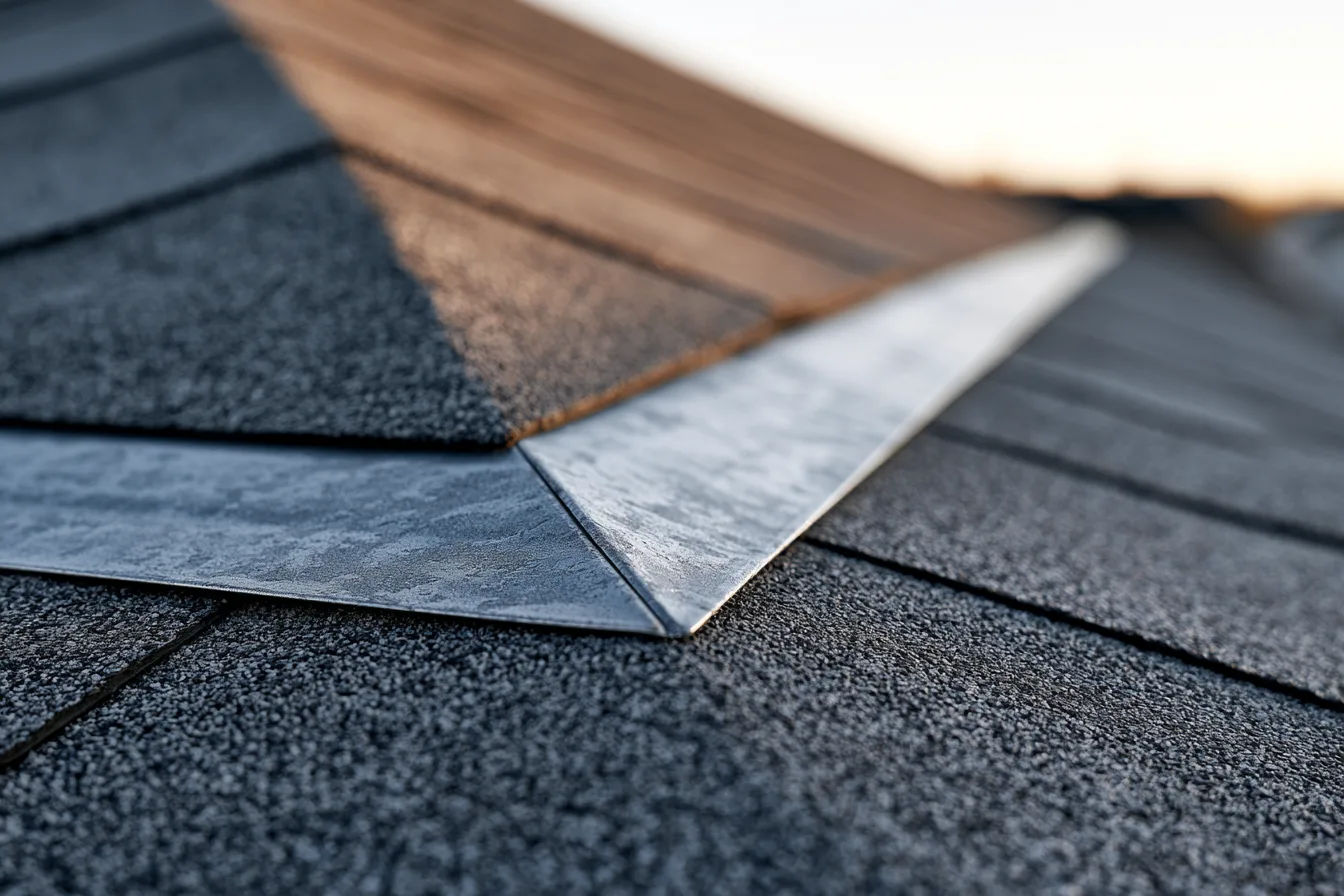
Where a roof meets a wall or chimney, shingles cannot finish the job on their own. Flashing bridges the change in plane and directs runoff onto the roof surface. The way it overlaps the roofing and wall materials matters as much as the metal itself.
A bead of caulk can cover a visible gap while leaving a reversed lap, missing flashing or deteriorated backing underneath. When the joint leaks, we examine the connection and open enough adjoining material to repair the failed detail.
The stain inside can be away from that joint. Water can travel behind the wall covering or along the deck before it appears. The inspection distinguishes roof flashing from a wall, window or masonry problem that needs related work.
Wall, chimney and pipe flashing repairs
Each penetration and change in roof plane has its own water-shedding detail. Repairs need to fit that detail and its surrounding materials.
Step and counterflashing
At a sloped roof-to-wall joint, step flashing overlaps with the shingle courses. Counterflashing or the wall covering protects the upper edge. Repairing only the exposed face leaves the connection incomplete if water can still enter behind it.
Chimney bases and corners
The base, sides and upslope connection have to guide runoff around the chimney. Deteriorated roof-side metal can be repaired, but failing masonry or chimney components need their own assessment.
Pipe bases and transitions
A pipe boot joins the penetration to the roof; changes in roof slope need compatible transition metal. The repair checks the base and laps as well as the seal around the opening.
Flashing repair or a masonry problem?
Water near a chimney or wall can come from more than one surface. The roofing work needs a clear boundary.
A repair that reconnects with the shingles
The goal is to restore the hidden laps that control water, rather than leave the next rainfall dependent on a surface patch.
For water whose entry is not yet known, roof leak investigation traces the path before the repair detail is selected.
Examine the whole connection
We look at the roof-side detail, adjoining material and likely path from the reported leak. Existing sealant or patching is considered as part of the investigation.
Expose the failed detail
Shingles or related material are lifted or removed where needed. Fragile adjoining roofing and damaged wood can widen the area that must be opened.
Rebuild and reconnect
Compatible flashing is installed with the correct overlaps and fastenings for the assembly. The covering is restored around it, and related wall or masonry work is coordinated where needed.
Watauga roof flashing repair FAQs
Is caulk enough to fix chimney flashing?
Caulk can be part of a specified detail, but it cannot replace missing metal, repair rotten backing or correct a lap that sends water behind the roof. If the flashing has failed, the repair needs to reach and rebuild that connection.
Do shingles have to come off for flashing repair?
Often some adjoining shingles need to be lifted or removed so the flashing can overlap correctly. How far the opening extends depends on the failed detail and whether the surrounding shingles remain workable. A repair cannot be sized from the exposed metal alone.
Does roof flashing repair include chimney masonry?
Roof-side flashing work and chimney masonry are different scopes. Cracked brick, damaged mortar or an upper chimney leak needs the appropriate masonry or chimney work; the roof repair addresses its own connection.